
Black and white are the go-to outfit formula for so many women, and for most of them, they aren't the most flattering choice.
I see it in almost every session. A client shows me her wardrobe, or tells me what she reaches for on a busy morning, and it's black trousers, a white shirt, a black jumper. Safe, easy, always looks "put together". I saw it again just today with an online client.
I understand why. Black and white feel neutral, chic and impossible to get wrong. But they're actually the two most extreme colours there are. And when you wear extremes right next to your face, they don't always play nicely with your natural colouring.
Why harsh colours near your face can work against you
The colours closest to your face act like a light reflector. They either bring out the best in your skin, eyes and hair, or they compete with them.
Pure black and bright white have a lot of contrast and no warmth at all. That works beautifully on some people. On others, the colour takes centre stage and your face fades into the background.
If you have a warm undertone, black and stark white can drain you. Your skin may look paler, greyer or more tired than it really is. Shadows under the eyes and around the mouth look deeper. Your natural golden or peachy glow gets lost.
If you're cool-toned but softer and more delicate, the problem is contrast. Black is simply too heavy for gentle colouring and fine features. It overpowers you, and people see the outfit before they see you. Shades of grey, soft navy and muted tones work with your complexion instead of against it.
The good news: you don't have to give up the ease of a simple, neutral formula. You just need the version of black and white that belongs to your colouring.
Your alternatives to black and white, season by season
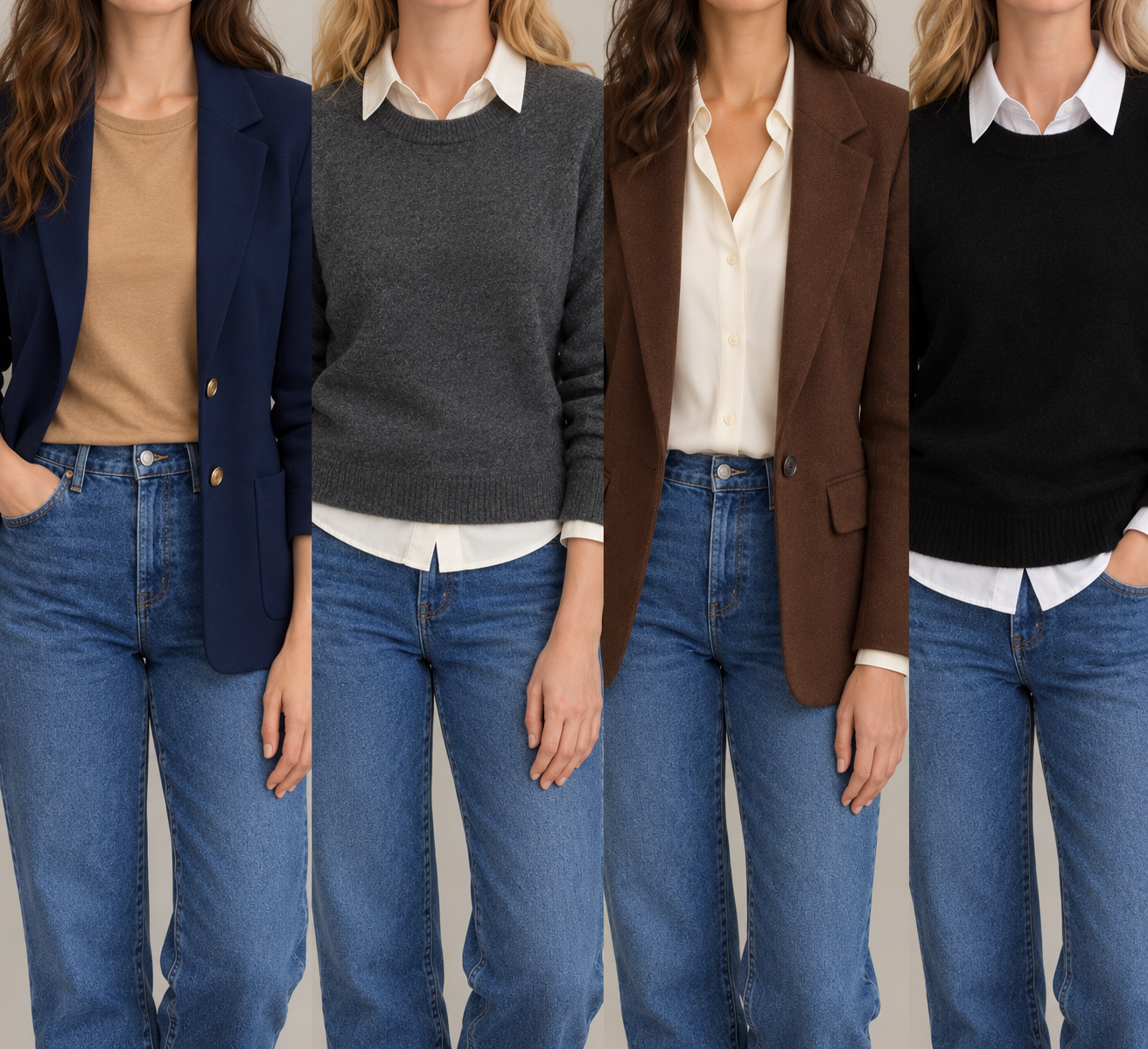
Every season has its own "black" (a dark neutral to anchor an outfit) and its own "white" (a light neutral for shirts and tops).
Spring needs warmth and (bright) lightness. Swap black for a warm navy or camel and you'll get the same polished look, with a fresher face.
Summer is all about softness. Charcoal and soft navy give you depth without the heaviness, and a soft white or pearl is far kinder than bright white.
Autumn looks richest in earthy depth. Dark chocolate brown is your black. Cream and ecru are your white, and they make your skin glow where white makes it flat.
Winter is the exception. Black and pure white are genuinely your colours, because your natural colouring has the high contrast to carry them. If you're a Winter, keep your black and white, and enjoy it.
A note: within each season there are softer, brighter, lighter and deeper versions. A deeper Autumn can sometimes handle a softened near-black, and a Winter with softer features may prefer charcoal. A personal colour analysis tells you exactly where you sit.
Love your black? You don't have to throw it out
I'm not here to empty your wardrobe. If black is your comfort zone, here's how to keep wearing it:
Move it away from your face. Black trousers, skirts, shoes and bags are fine. It's the colour by your face that matters most.
Add a buffer. A scarf, necklace or collar in one of your colours sits between your face and the black.
Swap gradually. Next time a black top or white shirt wears out, replace it with your season's alternative. No big overhaul needed.
Try it side by side. Hold your black jumper and your "new black" under your chin in daylight. You'll see the difference straight away.
Find your own "black and white"
The easiest outfit formula is still a simple, neutral one. It just works best when the neutrals are yours.
Not sure which season you are? A colour analysis takes the guesswork out. We'll look at your colouring together and find the neutrals, and the colours, that make you look like the best version of yourself. Book it here!